


Microprocessor-Controlled LCD Battery Charger 12V 24V GEKO G80037



Key information
Availability:Temporarily out of stock — ask for availability
Shipping cost:From 3.28 Euro
catalog number:G80037
Availability:
EAN code:5901477160165
Product condition:New, originally packaged
Guarantee:24 months of consumer protection
Weight:1,20 kg
By purchasing this product, you will receive 212 points from us, which you can use for shopping in our store. This applies only to customers registered in our store.
- Product description
- Product reviews (0)
- Purchase history (2)
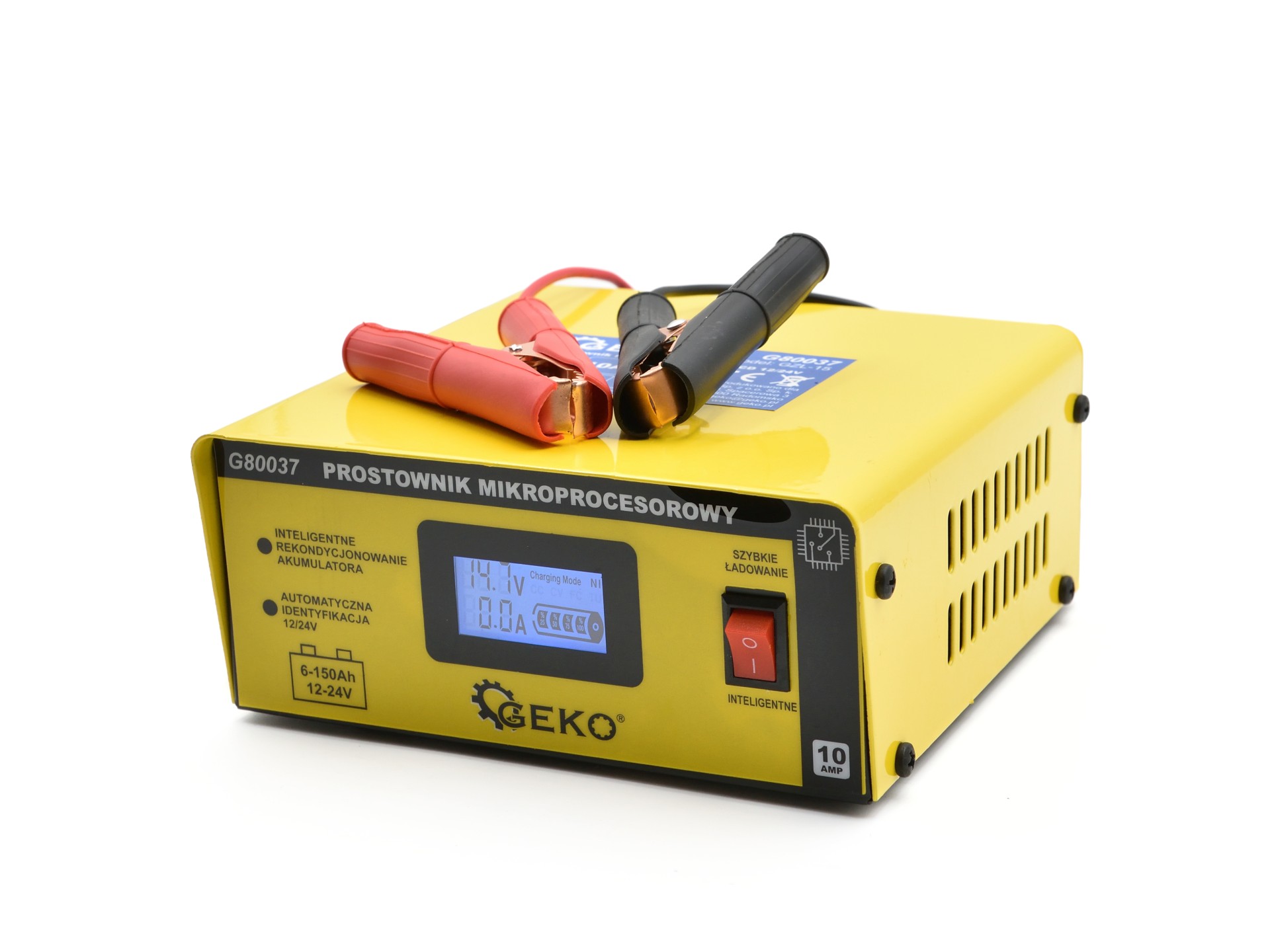
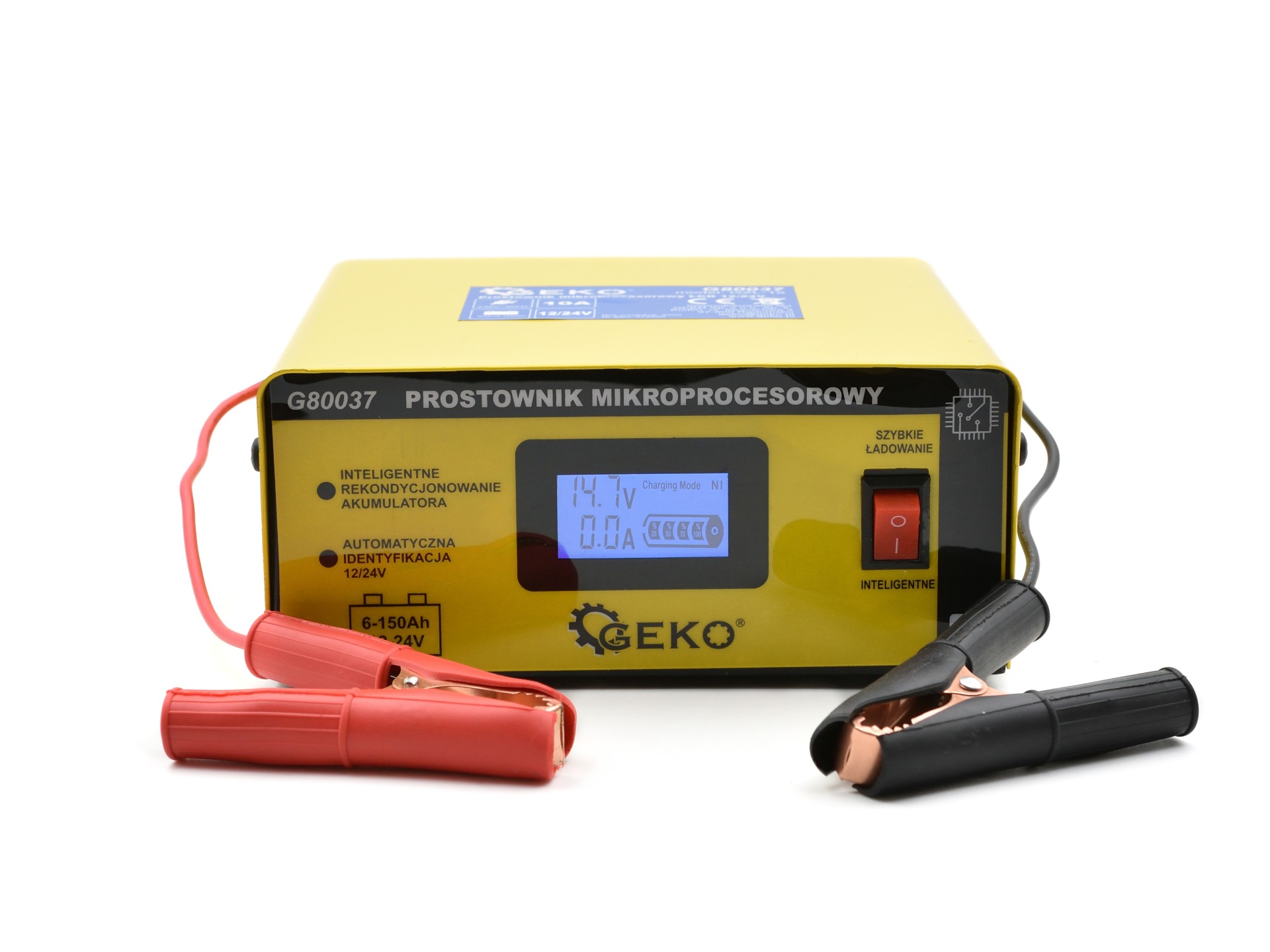
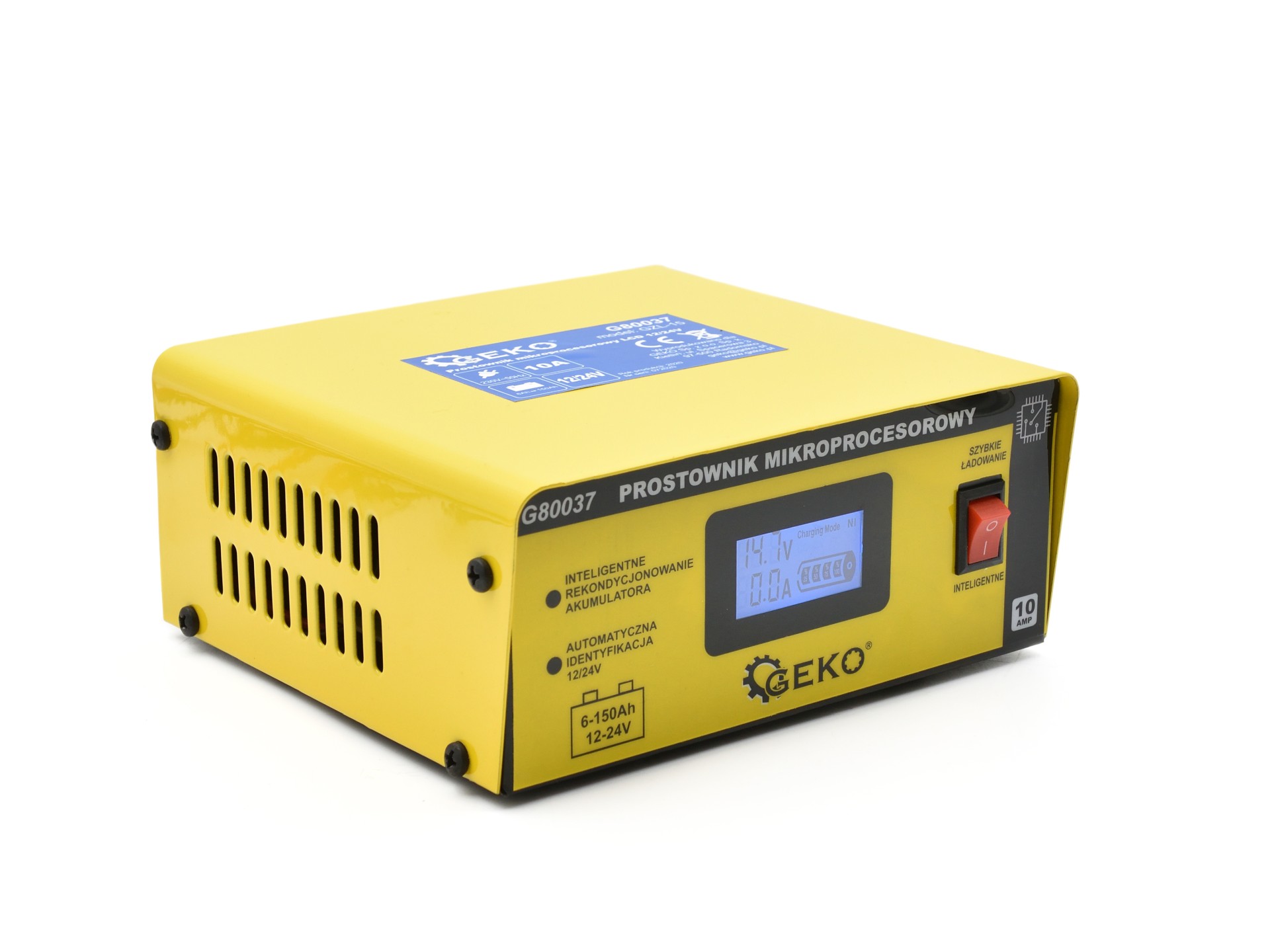
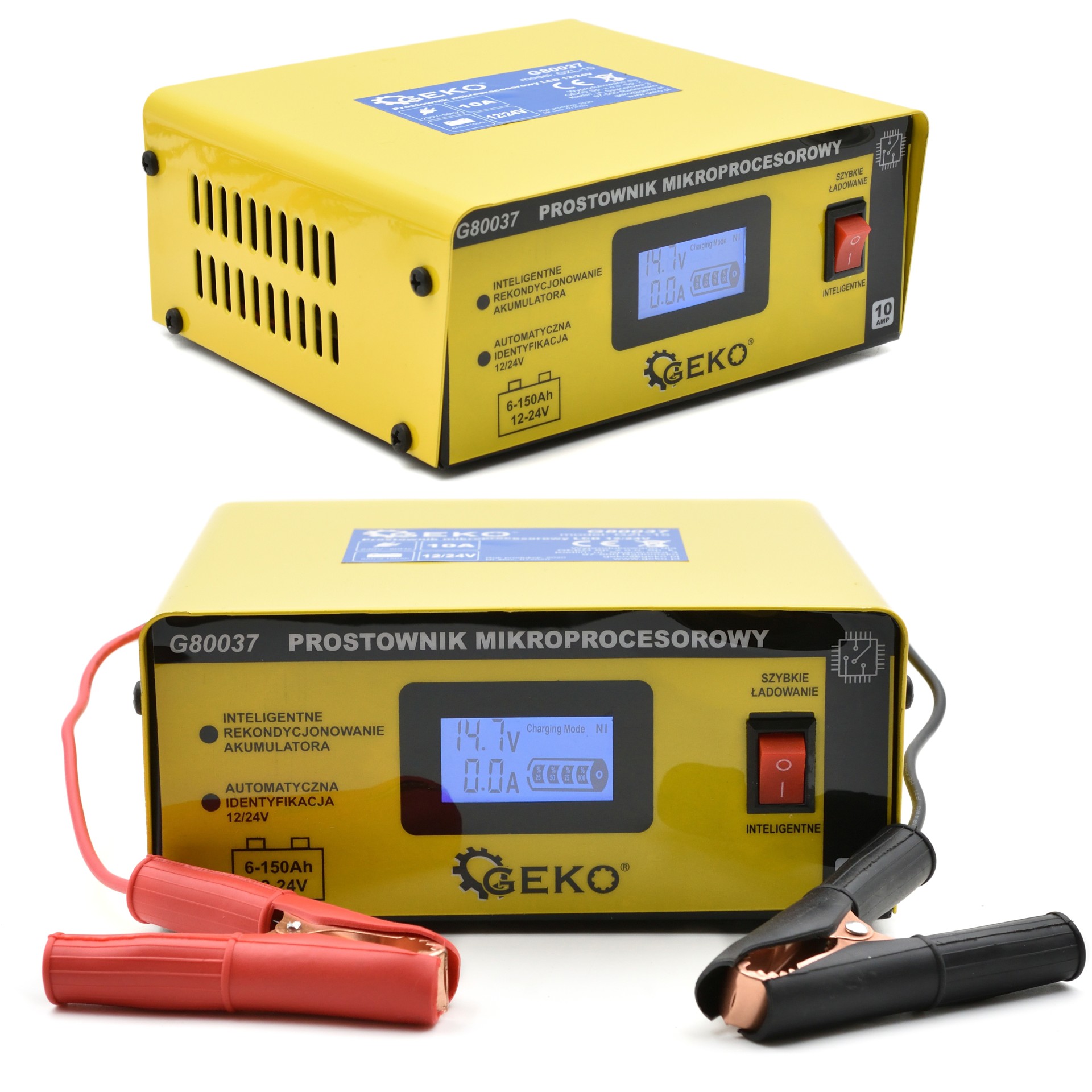
GEKO G80037 12V/24V Microprocessor-Controlled Battery Charger with LCD Display
An automatic, microprocessor-controlled battery charger designed for charging lead-acid batteries at 12V and 24V. The device features a 4-stage charging process with a choice of intelligent or fast mode.
Technical Characteristics
Microprocessor Control
The processor automatically adjusts the charging parameters to the battery's condition, monitoring voltage and temperature. It ensures the charging current is optimally matched at every stage of the cycle, which extends battery life.
LCD Display with Progress Indicator
A clear screen shows the current state of charge in four levels: 20%, 50%, 75% and 100%. It allows ongoing monitoring of the charging process without the need for additional measuring instruments.
Two Charging Modes
Intelligent mode runs a full 4-stage cycle with a float phase, suitable for regular maintenance. Fast mode shortens charging time while maintaining safety, useful in emergency situations.
Multi-Level Protection
Protection against overheating, short circuit, reverse polarity and overvoltage. The battery diagnostics function detects damaged cells and interrupts the process when continuing could be dangerous.
Technical Specification
| Model | G80037 |
| Charger type | Automatic, microprocessor-controlled |
| Supply voltage | 220-240V / 50Hz |
| Charging voltage | 12V / 24V |
| Charging current | 0-10A (automatically regulated) |
| 12V detection range | 8V - 14.5V |
| 24V detection range | 18V - 29V |
| Battery capacity | 6Ah - 150Ah (for 12V and 24V) |
| Battery types | Lead-acid, starter, maintenance-free (AGM/GEL) |
| Charging modes | Intelligent / Fast |
| Charging stages | 4-stage automatic process |
| Display | LCD with charge indicator (20%, 50%, 75%, 100%) |
| Mains lead length | 130 cm |
| Charging lead length | 140 cm (+ and -) |
| Protection | Overvoltage, overheating, short circuit, reverse polarity, battery diagnostics |
4-Stage Charging Process
The microprocessor control system carries out charging in four phases, switching automatically between them depending on the battery's condition:
Stage 1: Soft Start
Preliminary low-current charging that prepares a deeply discharged battery for the main process. This phase prevents cell damage at voltages below 10V (for 12V) or 20V (for 24V).
Stage 2: Main Charging
Supplying current of up to 10A at constant voltage. This phase restores the battery's capacity. The processor monitors the voltage rise and moves automatically to the next stage.
Stage 3: Absorption
Maintaining constant voltage as the current decreases. This phase equalises the charge across all cells and ensures full saturation of the electrolyte.
Stage 4: Float
Maintaining a full charge with small current pulses. It compensates for self-discharge without the risk of overcharging. The battery can be left connected for longer periods.
Applications
- Charging starter batteries in cars and vans
- Maintaining batteries in commercial vehicles and construction machinery (24V)
- Maintaining batteries in boats and caravans
- Charging batteries in quad bikes, scooters and motorcycles
- Reconditioning deeply discharged AGM and GEL batteries
- Seasonal maintenance of batteries in infrequently used vehicles
- Charging batteries in generators
- Servicing batteries in workshops and service stations
Operation and Safety
Before Charging Begins
Check the battery voltage with a multimeter to select the correct mode (12V or 24V). Make sure the battery capacity is within the 6-150Ah range. For batteries below 20Ah, the process may be too intense; above 150Ah, charging time will be significantly longer.
Connecting the Charger
First connect the clamps to the battery (red to +, black to -), and only then plug into a 230V mains socket. Reversing the order may cause sparking. The system automatically detects reverse polarity and blocks charging, signalling an error on the display.
Selecting the Charging Mode
Use intelligent mode for regular maintenance and for charging batteries left connected for longer. Use fast mode when you need a workable charge to a level that allows the vehicle to start. Bear in mind that frequent use of fast mode may shorten battery life.
Monitoring the Process
The LCD display shows progress in 25% steps. A full cycle for a 100Ah battery can take 10-15 hours in intelligent mode. In fast mode the time is reduced by around 30-40%, but without the float phase.
Battery Diagnostics
If the charger interrupts the process and signals an error despite correct connection, this may indicate a faulty battery: internal short circuit, plate sulphation or loss of electrolyte. In that case the battery must be checked before another charging attempt.
Compatibility with Battery Types
Wet Lead-Acid Batteries
Standard starter batteries with liquid electrolyte. Before charging, check the electrolyte level and top up with water if necessary.
Commercial information
Nobody has written a review for this product yet. Be the first to write a review.
Write a review for this product and you will receive 100 points from us that you can use for shopping in our store. This applies only to customers logged in and registered in our store.
Only registered customers can write product reviews. If you have an account in our store, log in to it, if not, create a free account and write a review.
Client: To...ra,date of purchase 03-08-2026 12:36
Client: To...ak,date of purchase 20-11-2022 11:40

GEKO G20115 Coloured Hot Melt Glue Sticks for Glue Gun 11 mm 12 pcs
Keltin K00101 Combination Spanner Set 6-22mm 12-Piece Satin Finish CRV
Hook & Loop Sanding Discs 125 mm P60, Pack of 50, KD11802 KRAFT&DELE
Electronic Battery Charger 12V 2A, 6A, 10A, 15A BOOST 300s 20A YT-83037 Yato