


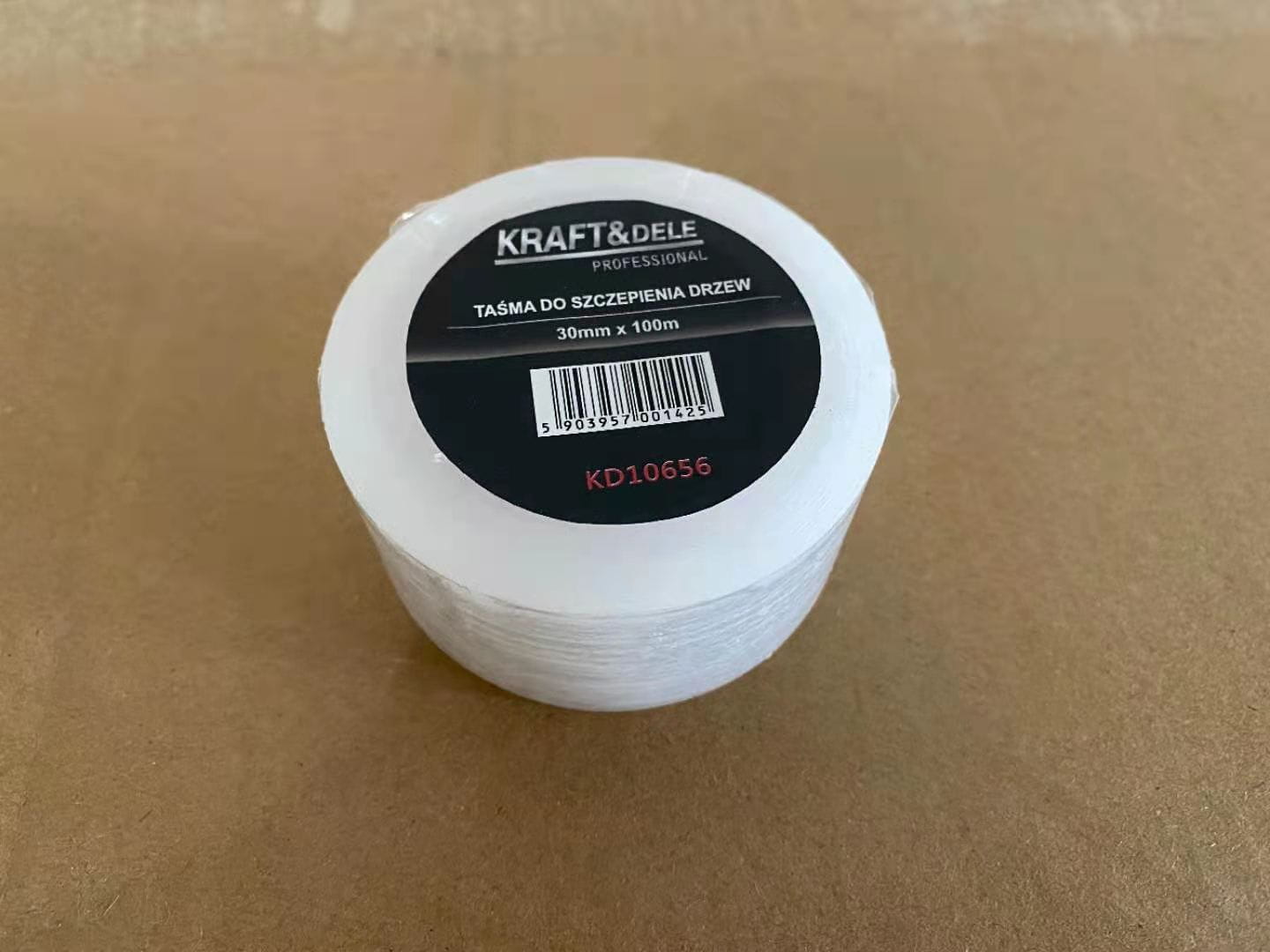
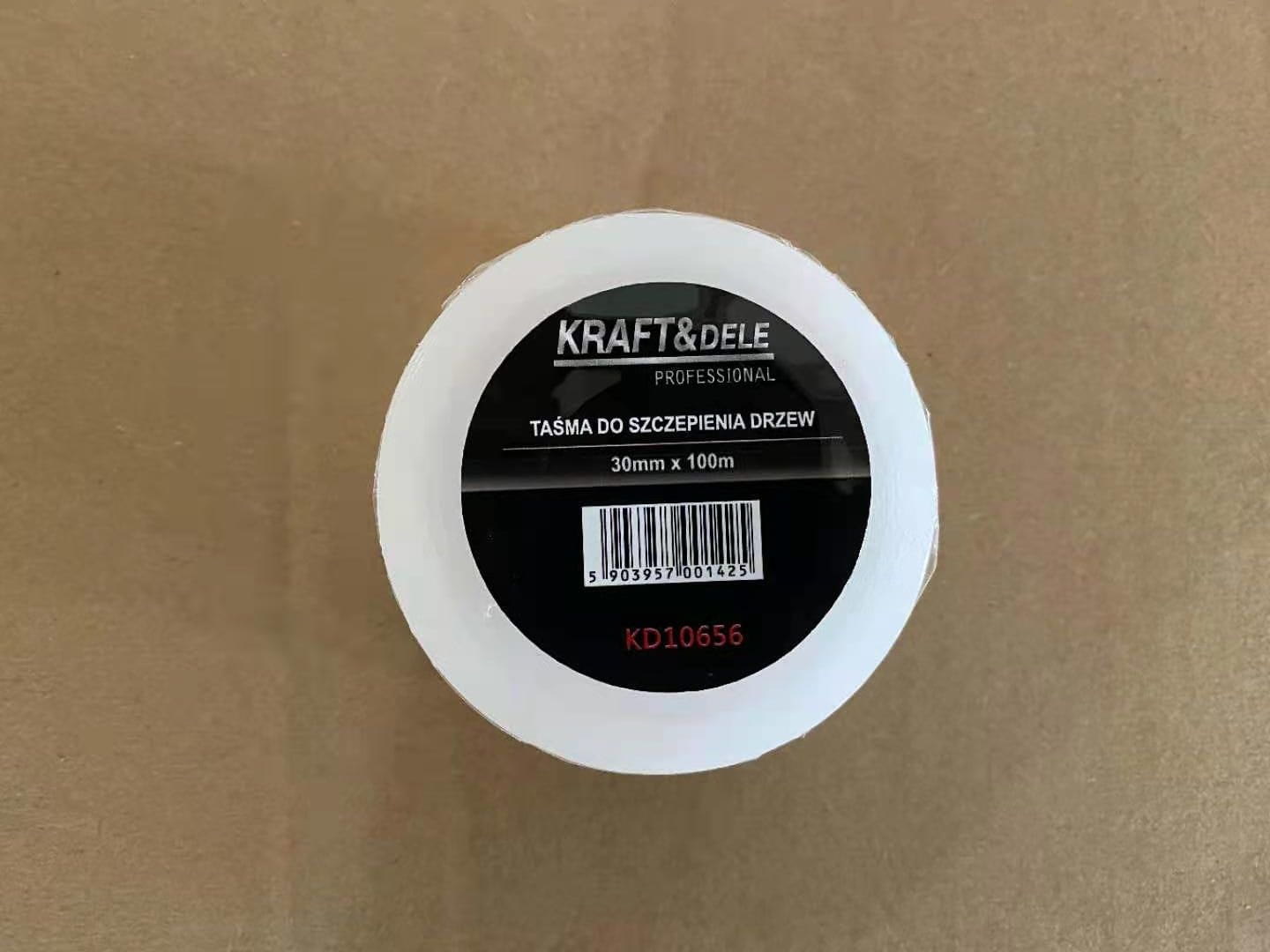
Tree Grafting Tape 30 mm x 100 m KD10656 KRAFT&DELE



Key information
Availability:Temporarily out of stock — ask for availability
Shipping cost:From 3.29 Euro
catalog number:KD10656
Availability:
EAN code:5903957001425
Product condition:New, originally packaged
Guarantee:24 months of consumer protection
Weight:0,09 kg
By purchasing this product, you will receive 12 points from us, which you can use for shopping in our store. This applies only to customers registered in our store.
- Product description
- Product reviews (0)
Tree Grafting Tape 30 mm × 100 m KD10656
A garden grafting tape made from transparent polyethylene (PE) film. It is used to wrap graft sites on fruit trees, shrubs and vines, sealing the union between the scion and the rootstock and protecting it from external factors until the tissues have knitted together.
Features and their practical benefits
High stretchability
The PE film stretches as it is wound, conforming to the irregular shapes of branches and scions. This allows the tape to sit tightly against the surface without the need for additional clips or adhesive.
Water resistance
The material is impermeable to water, which prevents the graft site from becoming waterlogged. Excess moisture around the union encourages the growth of mould and putrefactive bacteria that can prevent the tissues from knitting together.
Biological protection
The tight wrapping blocks the entry of micro-organisms, fungal spores and pests to the open plant tissue. This is particularly important immediately after the cut is made, when the plant is most susceptible to infection.
Transparency and plant safety
The transparent film allows the graft site to be inspected without removing the dressing. The PE material is chemically inert — it does not release toxic substances that could damage the plant's delicate vascular tissue.
Technical specification
| Model | KD10656 |
| Tape width | 30 mm |
| Roll length | 100 m |
| Material | Polyethylene (PE) film |
| Colour | Transparent |
| Properties | Water resistance, stretchability |
Applications
- Budding (T-budding method)
- Splice and whip-and-tongue grafting
- Grafting fruit trees: apple, pear, plum, sour cherry and sweet cherry
- Grafting grapevines and ornamental shrubs
- Protecting wounds after pruning cuts
- Joining split limbs and damaged stems
- Securing scions during storage before planting
How to choose the right grafting tape width
A 30 mm wide tape works well for grafting branches from a few to around fifteen millimetres in diameter. For budding on thin shoots (e.g. roses, young rootstocks), narrower 15–20 mm tapes are usually used. The wider 30 mm tape is suitable for whip grafting on thicker scions and for protecting wounds after cutting.
Use
The tape is stretched as it is wound, so that each successive layer overlaps the previous one by about half its width. The tension on the material causes the film to bond to itself without adhesive. Once the tissues have knitted together — usually after 3–8 weeks depending on the species and temperature — the tape should be slit or removed so that it does not restrict the growth in thickness of the shoot. The transparency of the material makes it easier to assess the condition of the graft without having to unwrap the union.
Commercial information
Nobody has written a review for this product yet. Be the first to write a review.
Write a review for this product and you will receive 100 points from us that you can use for shopping in our store. This applies only to customers logged in and registered in our store.
Only registered customers can write product reviews. If you have an account in our store, log in to it, if not, create a free account and write a review.

Garden Tapener Staples 6.95 x 4 x 0.55 mm 5,000 pcs YT-87032 YATO