


Yato YT-52871 Profiled Paint Scraper – 1.5 mm Steel Blade



Key information
Availability:In stock (ready to ship)
Shipping time:immediately
Shipping cost:From 3.29 Euro
catalog number:YT-52871
Availability:
EAN code:5906083075612
Product condition:New, originally packaged
Guarantee:24 months of consumer protection
Weight:0,12 kg
By purchasing this product, you will receive 21 points from us, which you can use for shopping in our store. This applies only to customers registered in our store.
- Product description
- Product reviews (0)
Yato YT-52871 Profiled Paint Scraper – 1.5 mm steel blade
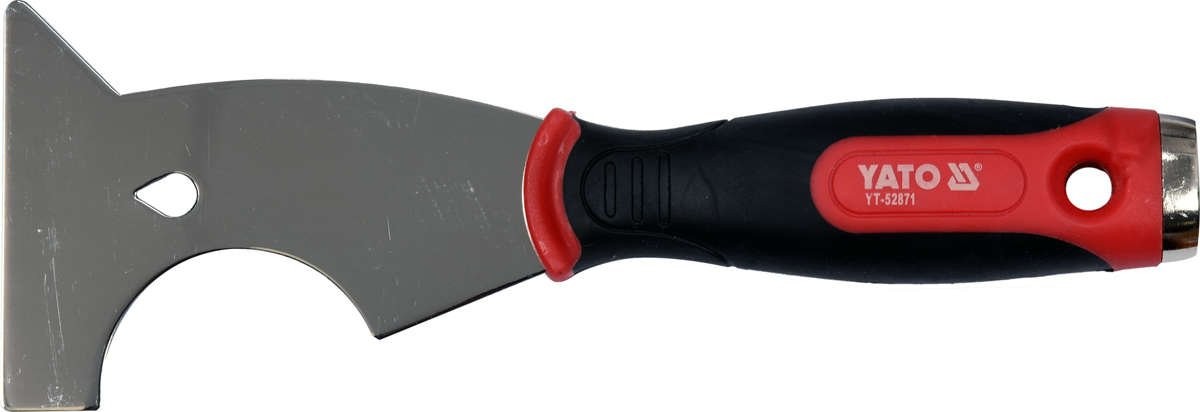
A hand tool for mechanically removing old paint coatings, rust, adhesive and other contaminants from flat and profiled surfaces. Its construction from 1.5 mm-thick steel blade gives the working edge rigidity and resistance to deformation during intensive use.
Features of the Yato paint scraper
1.5 mm steel blade
A thickness of 1.5 mm is the parameter that determines the rigidity of the blade. Thinner steel (below 1 mm) can bend under pressure, which makes the tool harder to control. Steel of this thickness keeps the scraper stable when stripping hard coatings without losing the sharpness of the working edge.
Profiled working edges
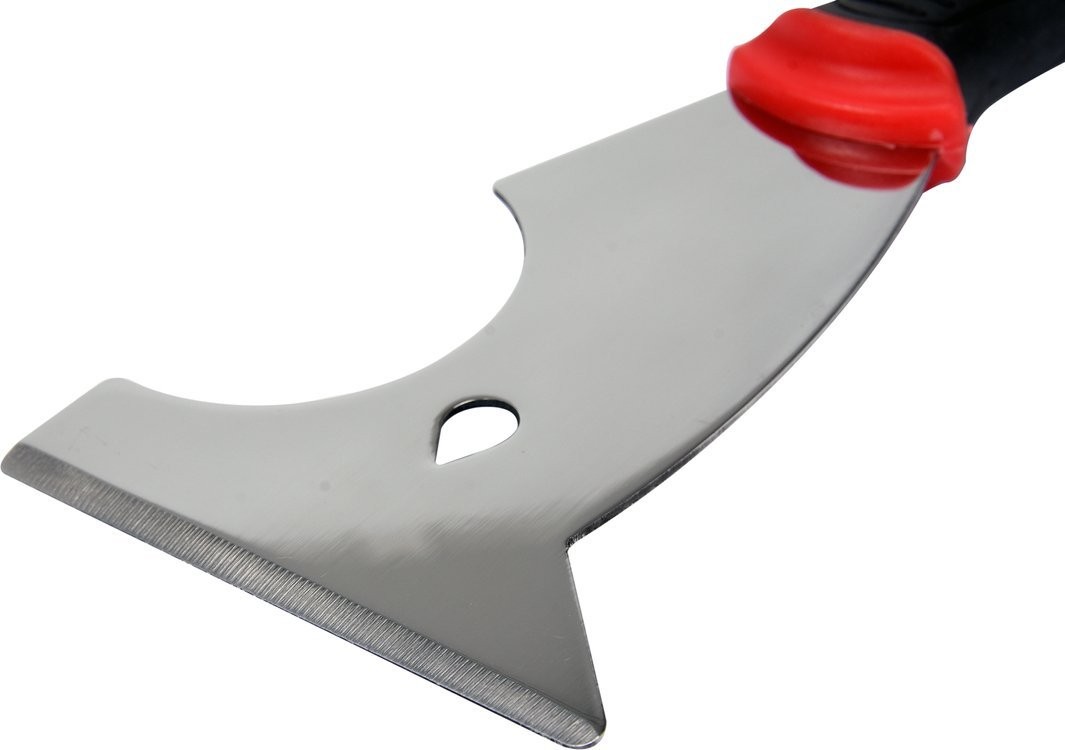
The edge shape is suited to work on items with irregular geometry, such as handrails, banisters and decorative mouldings. The profile makes it possible to reach into recesses and curves that are inaccessible to flat scrapers with a straight edge.
Nail-puller holes
An additional function that allows nails to be removed mechanically without reaching for a separate tool. Holes of a suitable diameter let you grip the nail head and use leverage to extract it from a wooden base.
Wide blade
The increased width of the working edge means a larger surface is treated in a single pass. This parameter is particularly important when stripping coatings from large flat areas, where it reduces the number of working strokes and shortens the job.
Technical specification
| Model | YT-52871 |
| Manufacturer | Yato |
| Blade thickness | 1.5 mm |
| Blade material | Steel |
| Edge type | Profiled |
| Additional functions | Nail-puller holes |
| Intended use | Flat and profiled surfaces |
Applications of the profiled scraper
- Removing old paint coatings from wood, metal and plastics before repainting
- Scraping rust from metal components such as banisters, fences and tools
- Cleaning profiled surfaces – handrails, decorative mouldings, window frames
- Removing adhesive residue and silicone and acrylic sealants from various substrates
- Preparing surfaces for new coatings by mechanical cleaning
- Pulling nails out of wooden structures using the dedicated holes
- Cleaning old mortar out of ceramic tile joints
- Removing stickers, labels and their sticky residue from smooth surfaces
Preparing a surface before painting
Mechanically removing old paint with a scraper is the first stage of substrate preparation. After scraping, sand the surface with 80–120 grit abrasive paper to level out irregularities and remove micro-layers of coating. Then degrease the surface and apply a primer, which improves the adhesion of the new paint.
Use and maintenance
When working with the scraper, hold the blade at an angle of 30–45 degrees to the surface being cleaned. A smaller angle gives more control but requires greater pressure. A larger angle speeds up the removal of thicker layers but may scratch delicate substrates.
When you have finished, clean the working edges of material residue with a wire brush or a cloth soaked in solvent. The steel blade needs periodic protection against corrosion – a thin coat of machine oil applied over the whole metal surface is enough.
Blade maintenance
The working edge loses its sharpness over time. It can be restored by sharpening with a fine-cut flat file or on 240–400 grit abrasive paper laid on a flat surface. The stroke should be even along the whole length of the edge in order to keep it straight.
Commercial information
Nobody has written a review for this product yet. Be the first to write a review.
Write a review for this product and you will receive 100 points from us that you can use for shopping in our store. This applies only to customers logged in and registered in our store.
Only registered customers can write product reviews. If you have an account in our store, log in to it, if not, create a free account and write a review.
